Buyers & Affordability
How Much House Can I Afford in Virginia Beach?
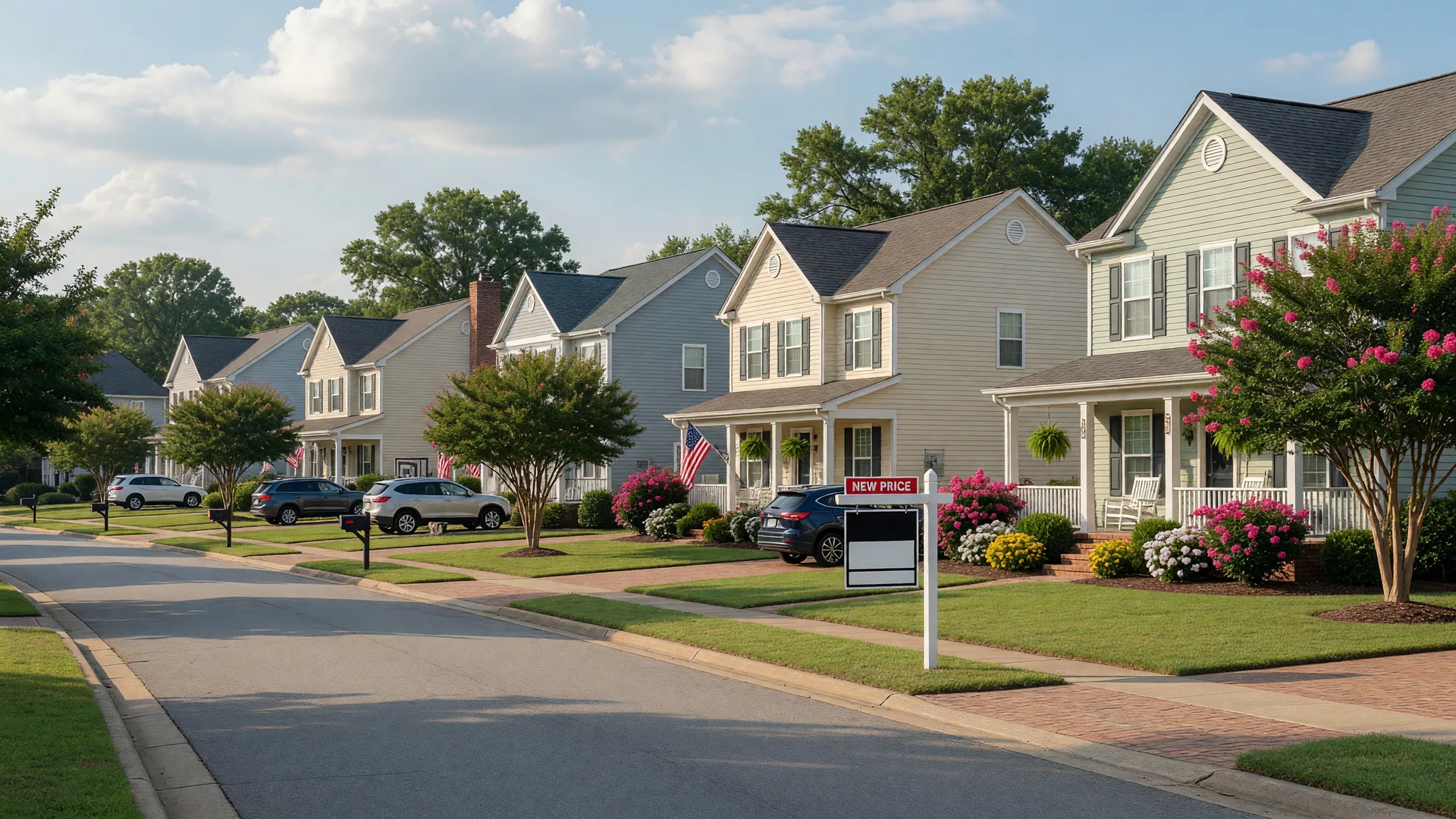
"How much house can I afford?" is the first question every buyer asks me, and it is the most important one to get right. With a median home price of around $425,000 in Virginia Beach and current 30-year mortgage rates near 6.7 percent, knowing your number before you start touring homes can save you time, disappointment, and money. I am Terry TreXler, a Marine Corps Veteran and real estate agent with 24+ years and over 1,000 transactions in Hampton Roads. Let me walk you through exactly what goes into the affordability equation so you know where you stand.
Understanding the 28/36 Rule
Lenders use two key ratios to determine what they are willing to lend you. Together these are called the 28/36 rule, and they are the industry standard for conventional loans:
Front-End Ratio: 28% of Gross Income
Your total monthly housing payment (principal, interest, property taxes, and homeowners insurance, plus HOA fees if applicable) should not exceed 28 percent of your gross monthly income. If you earn $8,000 per month, your housing payment should stay at or below $2,240. This is the lender's first check.
Back-End Ratio: 36% of Gross Income
Your total debt-to-income ratio (DTI) covers your housing payment plus any other monthly debt: car loans, student loans, credit card payments, and personal loans. This total should not exceed 36 percent of your gross monthly income. Some loan programs allow up to 43 percent or even 50 percent, but 36 percent is the safe benchmark.
For a household earning $100,000 per year ($8,333 per month), a 28 percent front-end ratio means a maximum monthly housing payment of about $2,333. At current rates, that pencils out to a home in the $325,000 to $350,000 range depending on your down payment and property taxes. A household earning $150,000 per year can typically afford $425,000 to $475,000 using the same math.
Virginia Beach Home Prices and Property Taxes
Virginia Beach's real estate market is strong. As of summer 2026, the median home price in Virginia Beach is approximately $425,000. That figure varies by neighborhood. You will find more affordable options in areas like College Park or Rosemont, while luxury homes near the Oceanfront and in Great Neck can exceed $800,000.
Property taxes in Virginia Beach currently sit at $0.97 per $100 of assessed value. On a $425,000 home, that works out to about $344 per month in property tax alone. Here is a quick look at what that means at different price points:
| Home Price | Monthly Property Tax | Est. Monthly Payment (6.7%, 5% down) | Income Needed |
|---|---|---|---|
| $300,000 | $243 | $2,250 | $96,000 |
| $350,000 | $283 | $2,600 | $111,000 |
| $425,000 | $344 | $3,100 | $133,000 |
| $500,000 | $404 | $3,600 | $154,000 |
| $650,000 | $525 | $4,600 | $197,000 |
Estimates include principal, interest, property tax, and homeowners insurance. Actual payments vary by credit score, down payment, HOA fees, and flood insurance requirements.
The Key Factors That Affect Your Buying Power
Many home buyers focus only on the purchase price, but your actual buying power comes down to five variables. Changing any one of them can shift your price range significantly.
Income
Your gross monthly income is the foundation. Lenders look at stable, documented income from your primary job, plus any side income you can show for at least two years. Military basic allowance for housing (BAH) counts as qualifying income for VA loans, which is a significant advantage for active-duty buyers in Hampton Roads.
Debt-to-Income Ratio
Your existing monthly debt payments reduce the amount lenders are willing to let you borrow. Paying off a car loan or consolidating credit card debt before applying can significantly increase your buying power. Even a $300 monthly car payment reduces your home buying budget by $40,000 to $50,000 at current rates.
Credit Score
Your credit score directly affects the interest rate lenders offer you. A score of 740 or higher gets you the best rates. At 680 you will pay roughly 0.25 to 0.5 percent more, which adds $60 to $120 per month on a $425,000 loan. Before you start house hunting, pull your credit report and address any errors or high balances. A 30-point improvement can save you thousands over the life of the loan.
Down Payment
A larger down payment means a smaller loan and lower monthly payments. Conventional loans require as little as 3 percent down, FHA needs 3.5 percent, and VA loans offer 0 percent down for eligible buyers. In Virginia Beach, a 5 percent down payment on the median $425,000 home is $21,250. A 20 percent down payment of $85,000 would eliminate private mortgage insurance (PMI) and reduce your monthly payment by $200 to $300.
Interest Rates
With 30-year fixed rates around 6.7 percent in August 2026, every half-percent matters. A 6.2 percent rate versus 6.7 percent saves you roughly $150 per month on a $400,000 loan. That is $54,000 over 30 years. Your lender locks your rate at application, but you can also buy discount points to lower the rate if it makes sense for your timeline.
Virginia Beach-Specific Costs to Factor In
Beyond the basic math, Virginia Beach buyers need to account for a few local factors that can affect monthly costs:
The Pre-Approval Process: Know Before You Shop
Pre-approval is not the same as pre-qualification. Pre-qualification is a rough estimate based on numbers you tell a lender. Pre-approval means the lender has verified your income, assets, and credit, and is willing to lend you a specific amount. In a competitive market like Virginia Beach, a pre-approval letter separates serious buyers from window shoppers.
Here is what you need for a pre-approval application:
Most lenders can issue a pre-approval within 24 to 48 hours if your documents are clean. I recommend getting pre-approved with a local lender who knows the Virginia Beach market. They understand our flood zones, tax rates, and which condo buildings qualify for financing. A local pre-approval also carries more weight with listing agents when you make an offer.
Tips for Maximizing Your Buying Power
Over 24 years and 1,000+ transactions, I have helped hundreds of buyers stretch their budget the smart way. Here are the strategies that actually work:
Lower Your DTI Before You Apply
Pay off small credit card balances and avoid financing a car before you buy a home. Every $100 in monthly debt reduces your buying power by roughly $15,000. If you can clear $500 in monthly payments, you just gained $75,000 in home buying power.
Consider a VA or FHA Loan
VA loans require zero down and have no PMI. FHA loans allow 3.5 percent down with a 580 credit score. Both can get you into a home sooner with less cash upfront. If you are a veteran or active-duty military, the VA loan is almost always your best option in Hampton Roads.
Look Beyond Virginia Beach Proper
Neighboring cities like Chesapeake and Norfolk often offer more space for the same price. A $400,000 budget might get you a 1,600-square-foot home in a popular Virginia Beach neighborhood but a 2,200-square-foot home in parts of Chesapeake or Suffolk. Expand your search radius and let your dollar go further.
Shop Multiple Lenders
Different lenders offer different rates and fee structures. Getting quotes from three lenders can save you $5,000 to $15,000 over the first five years of your loan. I can connect you with three trusted local lenders who specialize in Virginia Beach financing.
Ask About Down Payment Assistance Programs
Virginia has several down payment assistance programs for first-time buyers. The Virginia Housing Development Authority (VHDA) offers grants and second mortgages that can cover your down payment and closing costs. Some local programs in Hampton Roads add additional support for teachers, veterans, and first responders.
Real-Life Scenarios: What Different Budgets Look Like
To help you picture how this works in practice, here are three common buyer profiles I see regularly in Virginia Beach:
The First-Time Buyer ($60,000 income)
With a $5,000 monthly gross income, a 28 percent front-end ratio gives you a $1,400 monthly payment. Using a 3.5 percent down FHA loan or a zero-down VA loan, that translates to roughly $230,000 to $260,000 in purchasing power. You can find townhomes and starter homes in neighborhoods like Rosemont, College Park, and parts of Norfolk at that price point.
The Move-Up Buyer ($120,000 income)
A $10,000 monthly income supports a $2,800 housing payment. With 10 percent down and current rates, your price range is roughly $375,000 to $425,000. That puts you in solid single-family home territory across Virginia Beach neighborhoods like Kempsville, Great Neck, and the Indian Lakes area.
The Military Buyer with BAH ($95,000 total income)
A military family with BAH of $2,500 per month on top of $60,000 base pay has roughly $8,000 in monthly income. Using a VA loan at zero down with a $2,240 monthly payment (the 28 percent ceiling), you can comfortably afford $320,000 to $360,000. With no PMI and no down payment, your out-of-pocket costs at closing are significantly lower than a conventional buyer.
Is Now a Good Time to Buy in Virginia Beach?
The short answer is that no one can perfectly time the market. But here is what I can tell you after living and working through every market cycle since 2002: Virginia Beach real estate has historically appreciated at a steady 4 to 6 percent per year. Waiting for rates to drop while prices keep climbing often means you end up paying more for the same home next year.
Right now, inventory is improving compared to the last two years. Buyers have more choices and less competition than in 2024 and 2025. If you find a home that fits your budget and meets your needs, buying now means you start building equity immediately. You can always refinance when rates come down later.
Let's Find Your Number
I have helped over 1,000 families buy and sell homes in Hampton Roads. I know the neighborhoods, the lenders, and the numbers. Whether you are a first-time buyer, a growing family, or a veteran using your VA benefit, I can help you find the right home at the right price. Talk soon.
Get Your Pre-Approval Started